
The Skin Above The Navel Decides Which Operation.
Mini or full is not a preference. It is decided by whether there is excess skin above the navel and how far the muscle separation extends. Choosing a mini for a full-length problem is the most common revision we are asked to perform.
Who A Mini Genuinely Suits.
The group is smaller than the internet suggests: loose skin confined below the navel, no meaningful excess above it, minimal or low muscle separation, and reasonable skin tone. Typically a woman after one pregnancy or a modest weight change who dislikes a small lower shelf.
The scar is shorter, the navel is not moved, and most patients are back to desk work in about a week rather than two.
What The Muscle Repair Changes.
Diastasis recti is the separation of the two vertical abdominal muscles at the midline. The connective tissue between them stretched during pregnancy and does not recoil, so the abdominal wall bulges forward even in a slim woman with strong muscles.
The repair stitches them back together along their whole length. The visible effect is a flat profile rather than a flat surface, and many patients report less lower back strain because the front of the core is doing its job again.Exercise cannot close it, and crunches performed against a separation can widen it.
Where The Scar Sits, And Who Decides.
The full operation removes skin from ribs to pubis, repositions the navel through a new opening, and repairs the muscle along its whole length. In exchange you accept a longer scar placed low across the hips.
Where exactly it sits is planned with you, wearing the underwear or swimwear you actually wear, standing up. A caesarean scar can often be incorporated into the new one. A scar planned on a reclined patient rides higher than expected once you stand.
Drains And Seroma: What They Are For.
Lifting the skin off the abdominal wall leaves a potential space, and the body fills spaces with fluid. A drain removes that fluid while the layers seal to each other.
Drains typically stay three to seven days depending on output, and they come out at a threshold, not on a fixed date. Removing them early because a flight is booked is how a seroma forms, and a seroma is a longer inconvenience than the drain was.
The Belly Button: The Detail That Gives It Away.
In a full abdominoplasty the navel stays on its stalk and the skin is brought down around it, so a new opening has to be made. Its shape, size and the small amount of surrounding skin recessed behind it are what make it read as natural or as surgical.
A round, wide, sitting-proud navel is the classic giveaway. This is a detail worth asking to see in a surgeon's own photographs, close up, rather than in a wide shot of an abdomen.
The Ones People Actually Ask.
Is plastic surgery in Turkey safe?
It is when it is done properly. Your operation takes place in a licensed full-fledged hospital with intensive care on site, performed by a board-certified plastic surgeon, under a Health Tourism Authorisation Certificate from the Republic of Türkiye Ministry of Health. We also hold Temos international accreditation and an ISO 9001 (UKAS) certified management system. Ask any clinic abroad for these three things before you book.
How many days do I need to stay in Istanbul for surgery?
Plan 6-7 nights for most operations: consultation and tests on day one, surgery on day two, one night in hospital where needed, then dressing changes and the final check-up before you fly. Eyelid surgery and small procedures need only 3-4 nights.
Who will perform my operation?
A plastic surgeon certified by the Turkish Ministry of Health, never an assistant or technician. You meet your surgeon before the operation, discuss what is realistic for your anatomy, and the same surgeon sees you at the post-operative check-up.
Why is aesthetic surgery cheaper in Turkey than in Europe?
Lower running costs, favourable exchange rates and high surgical volume, not lower standards. The implants, sutures and devices are the same CE-certified brands used in Europe, and our surgeons operate every week rather than a few times a month.
When can I fly and go back to work after surgery?
Flying is normally cleared 5-7 days after surgery. Desk work is possible after about a week for rhinoplasty and eyelid surgery, and 2-3 weeks for body procedures such as tummy tuck, BBL or mommy makeover. Your surgeon gives you a written timeline for your case.
Do you help with hotel, transfers and translation?
Yes. VIP airport transfers, a translator in your language and help with hotel booking are part of every package, and your coordinator stays with you from the first message until long after you fly home.
One Patient, Three Frames.
Before and after, where the scar actually sits, and the result once it has settled months later rather than on the day the dressing came off.
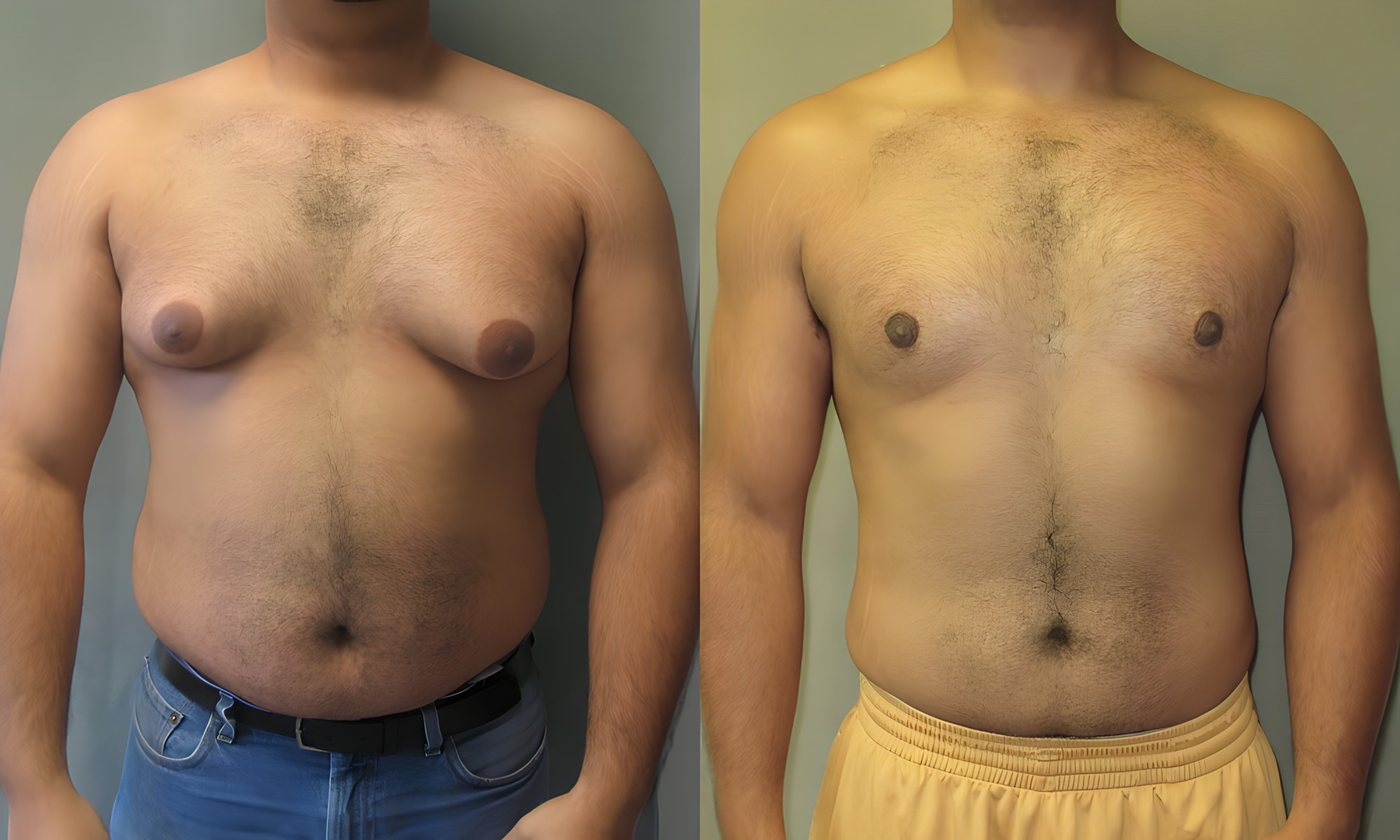
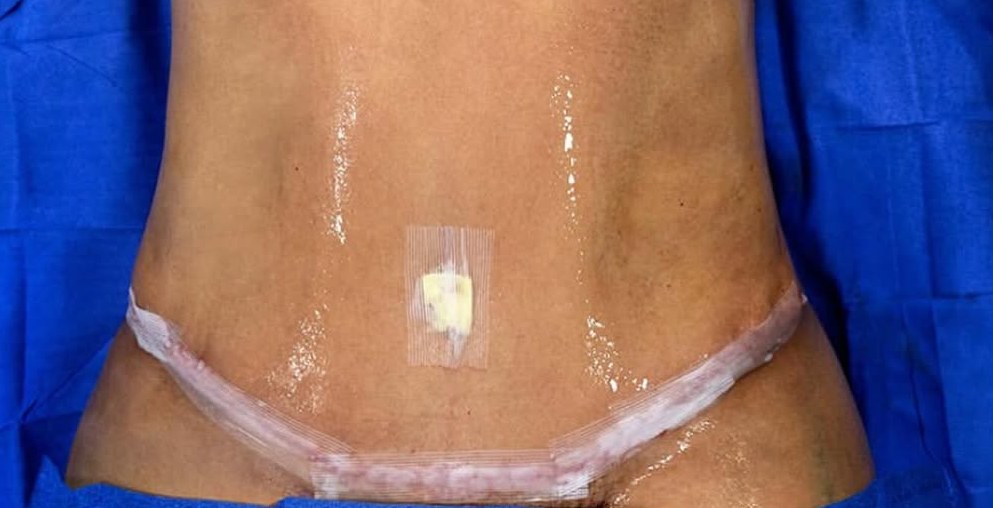
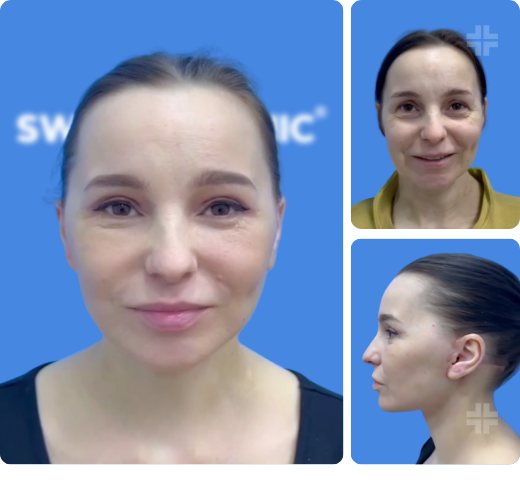
The rest of the before-and-after set is on the plastic surgery page.
Related Treatments.
Which approach suits your nose is decided by how much tip work it needs, not by surgeon preference and not by what you ask for by name.
Deep-Plane FaceliftA SMAS lift tightens the muscular layer.
Eyelid SurgeryEight to twelve millimetres of skin, marked with you sitting upright and rechecked with a pinch test.
Vaser LiposuctionVaser emulsifies fat before any of it is suctioned, so it leaves through a smaller cannula with less tearing of the tissue around it.