
One Block, No Layer To Chip.
A monolithic crown is milled from a single piece of zirconia. There is no metal core to show as a grey line and no porcelain layer to break away. Those two sentences are the whole argument against the crown it replaced.
- Days in Istanbul
- 5-7
- Hospital stay
- Outpatient
- Milled
- In-house
- Service life
- 15-20 years
- Metal core
- None
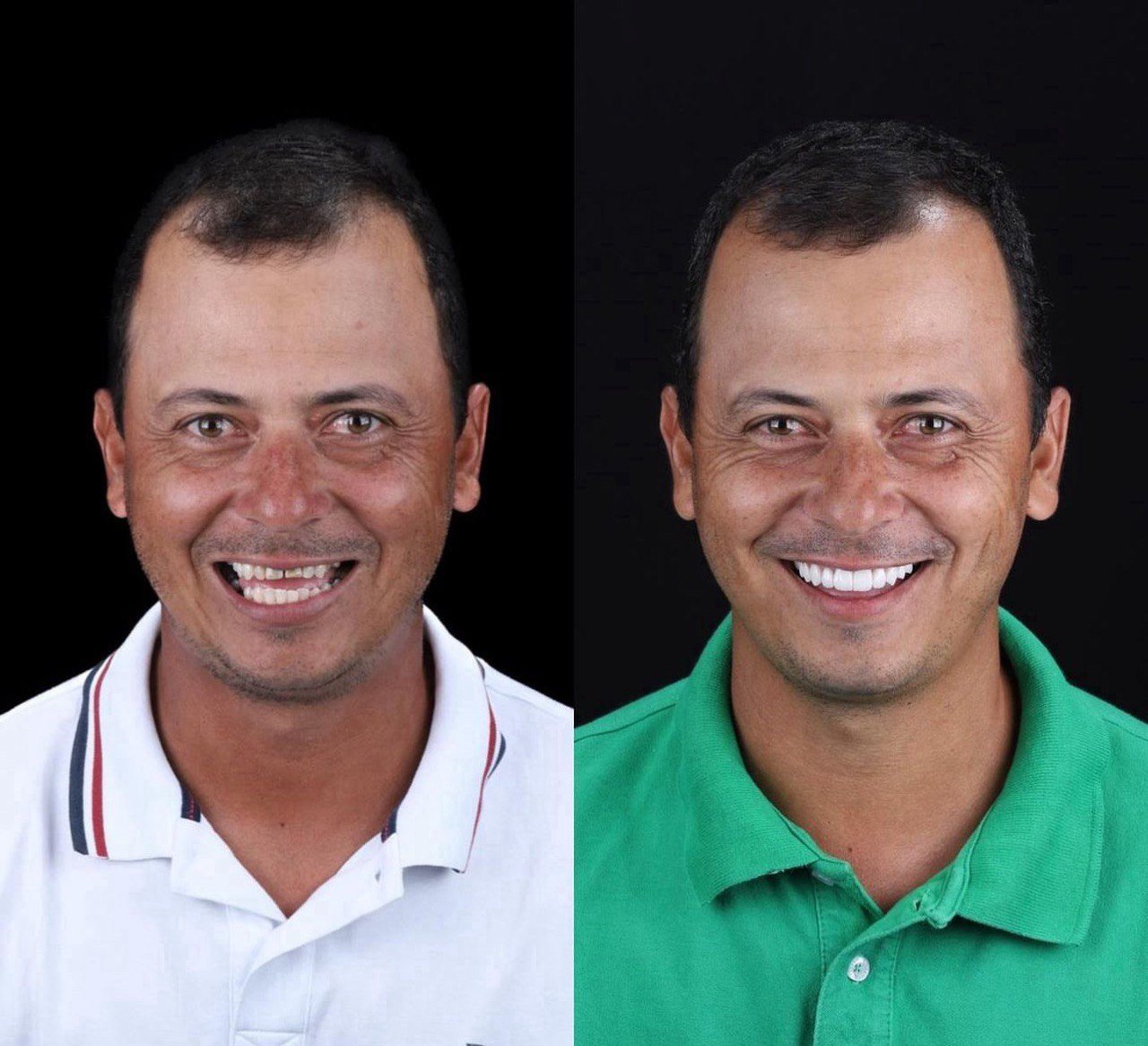
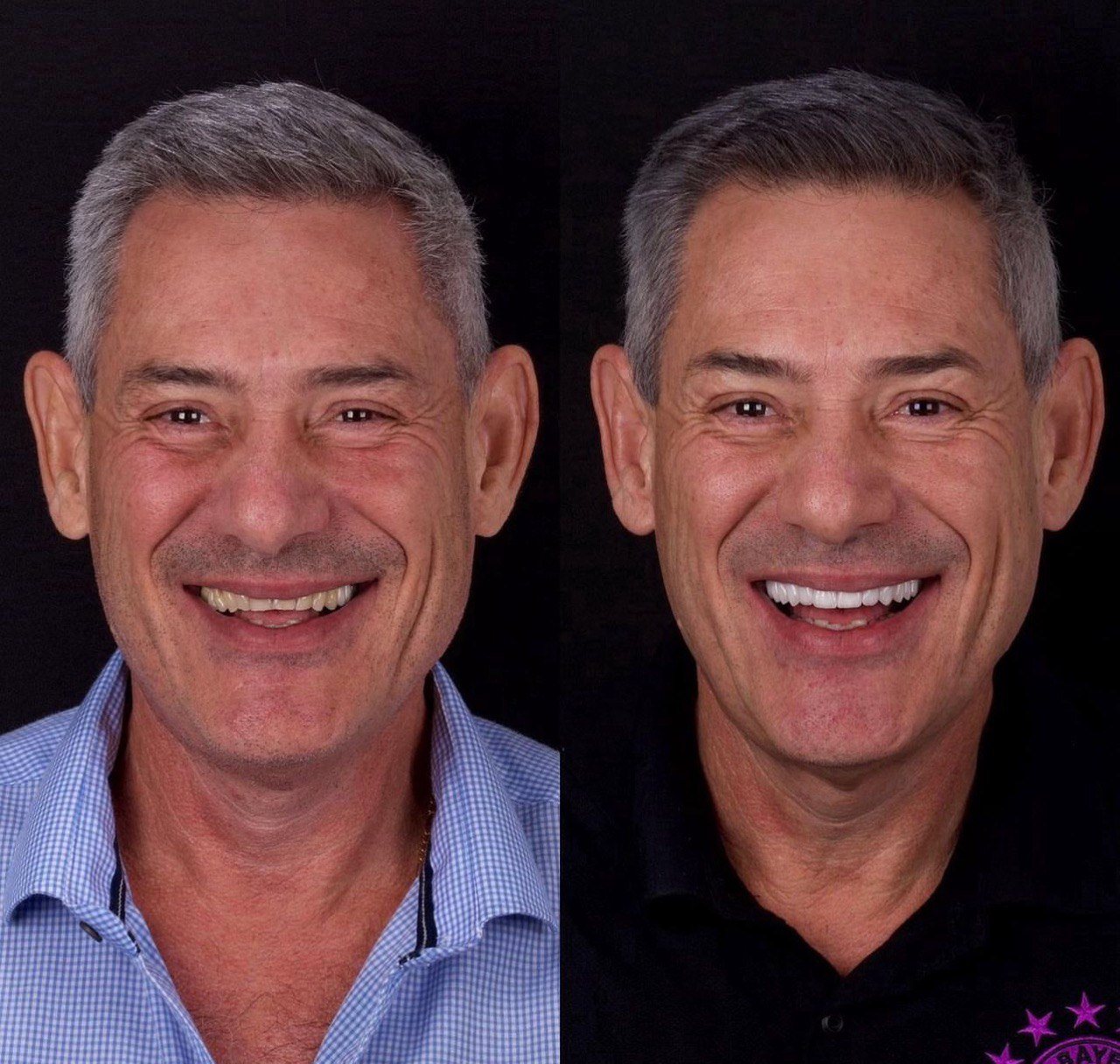
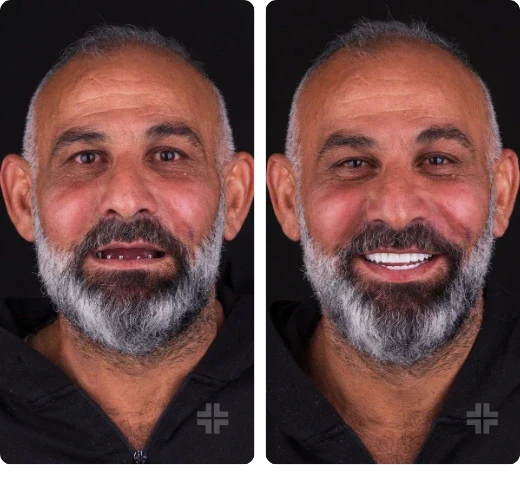
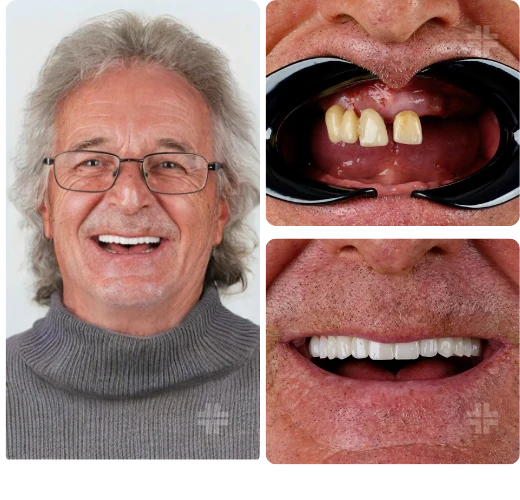
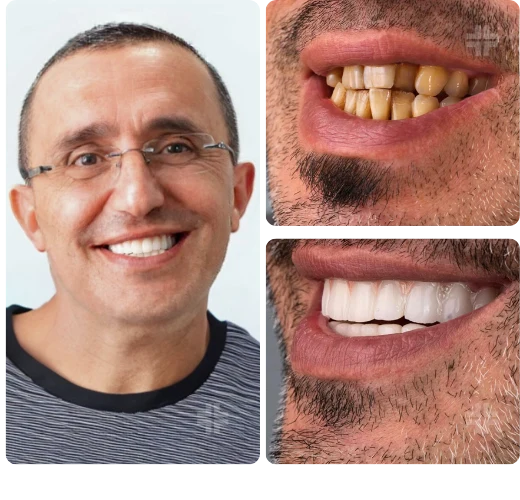
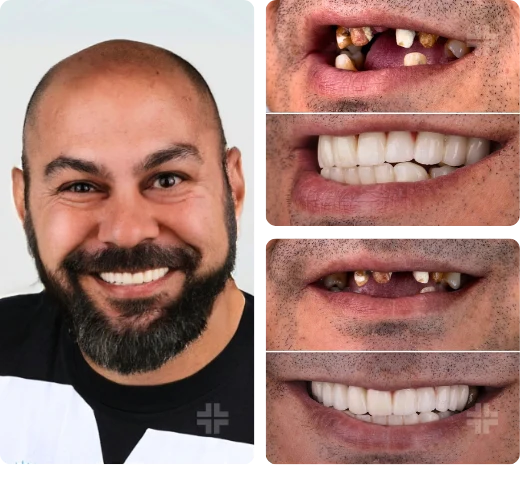
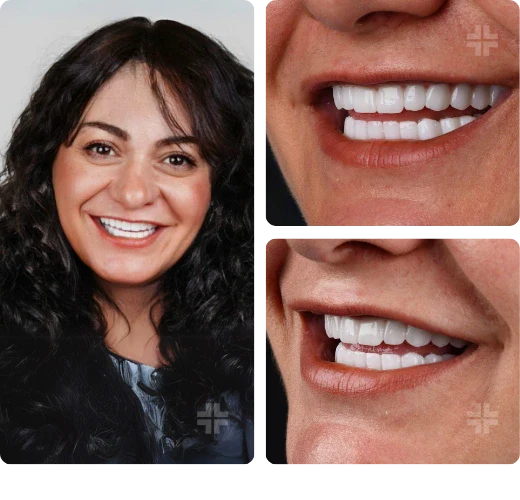
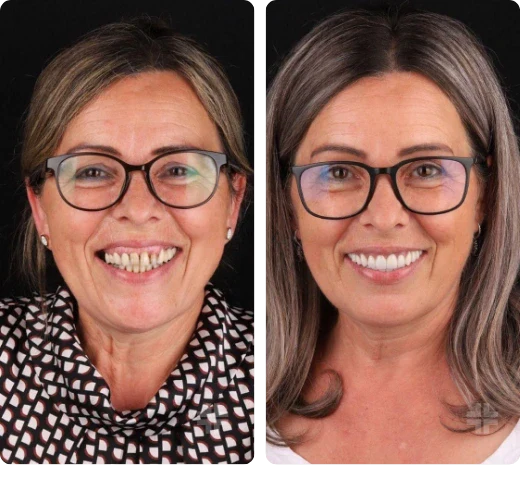
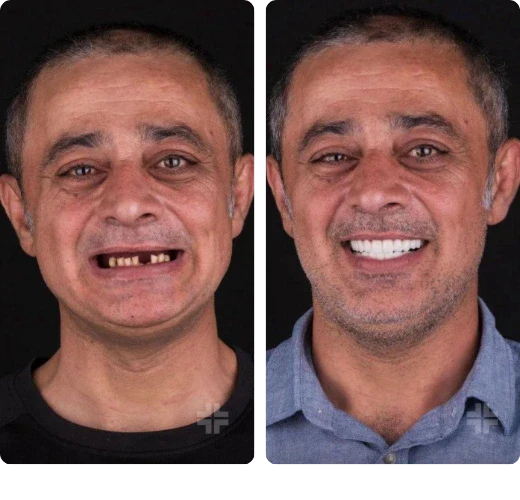
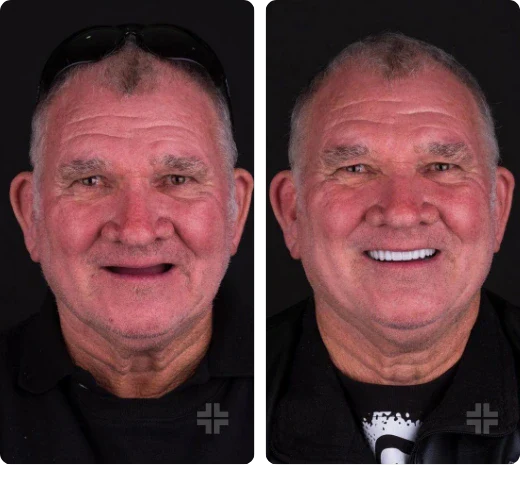
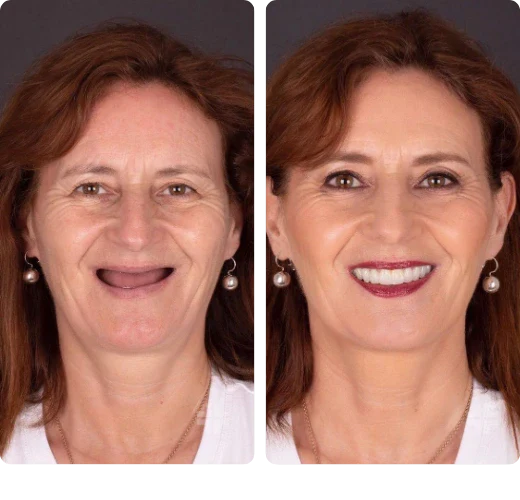
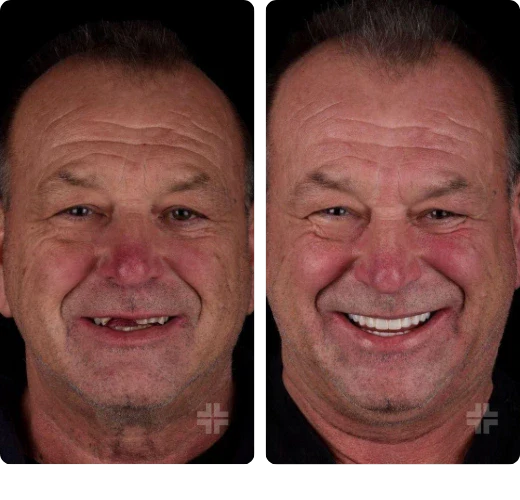
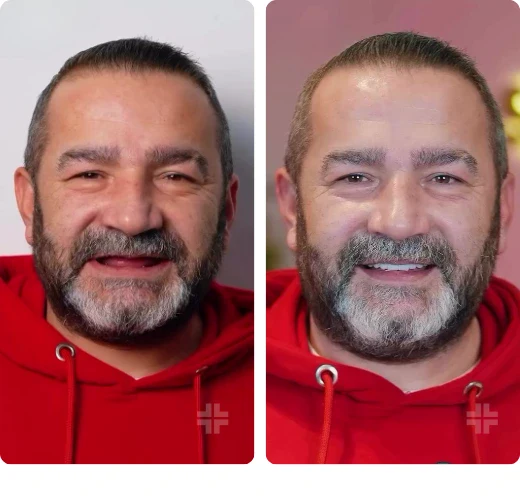
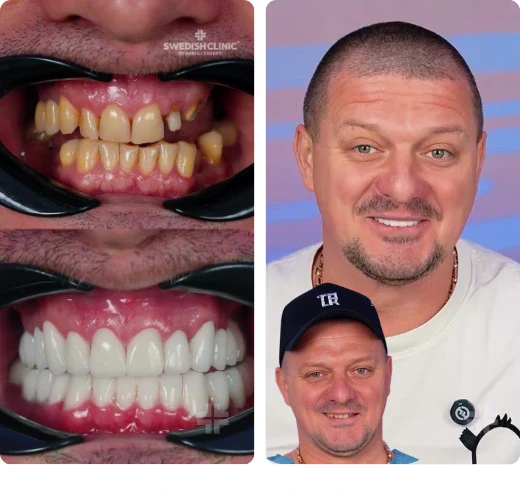
Twenty-Six People, Both Photographs.
Our own patients, each one shown as they arrived and as they left. We do not label which treatment each person had, because a portrait cannot prove that and we will not guess on their behalf.
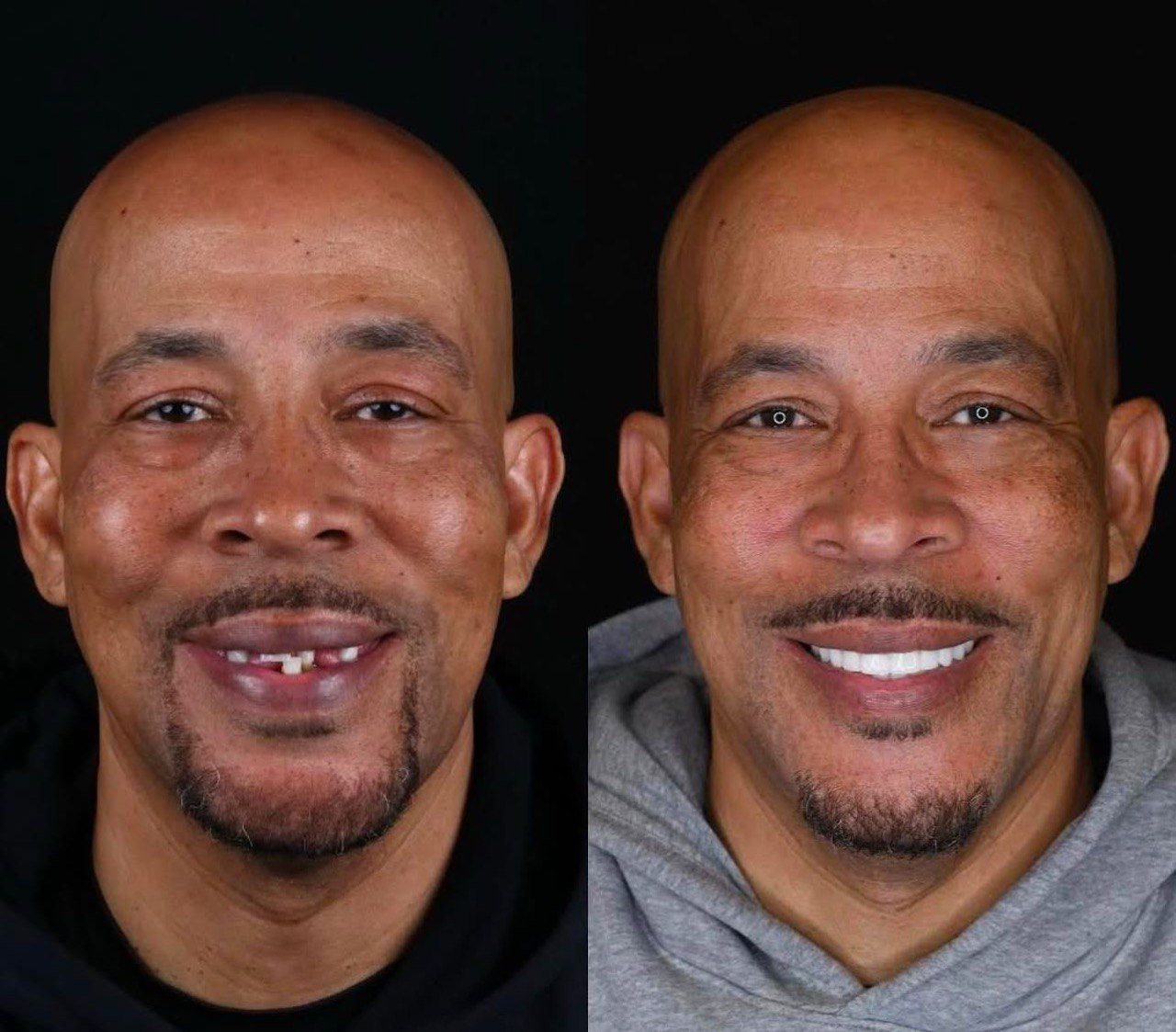
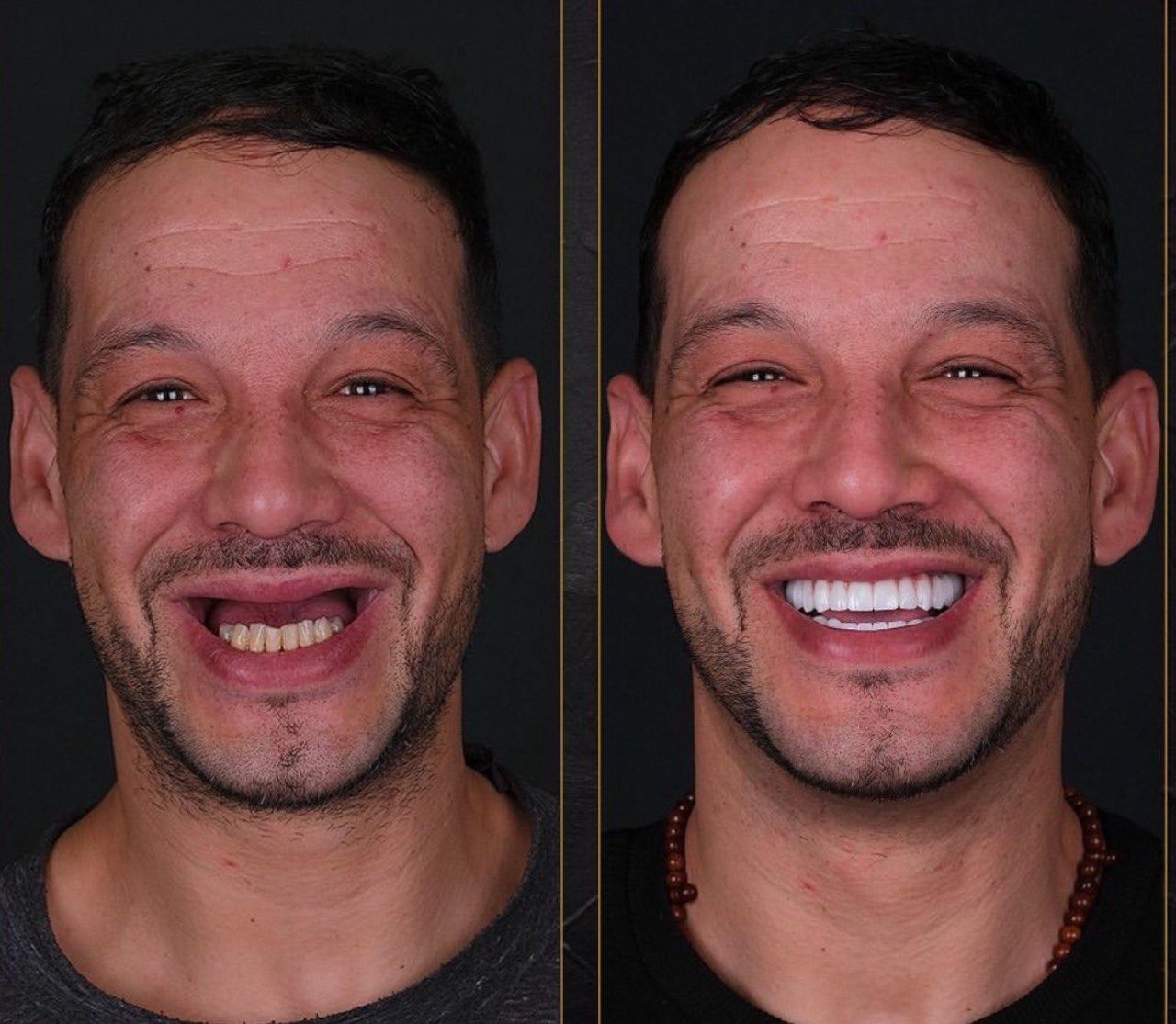
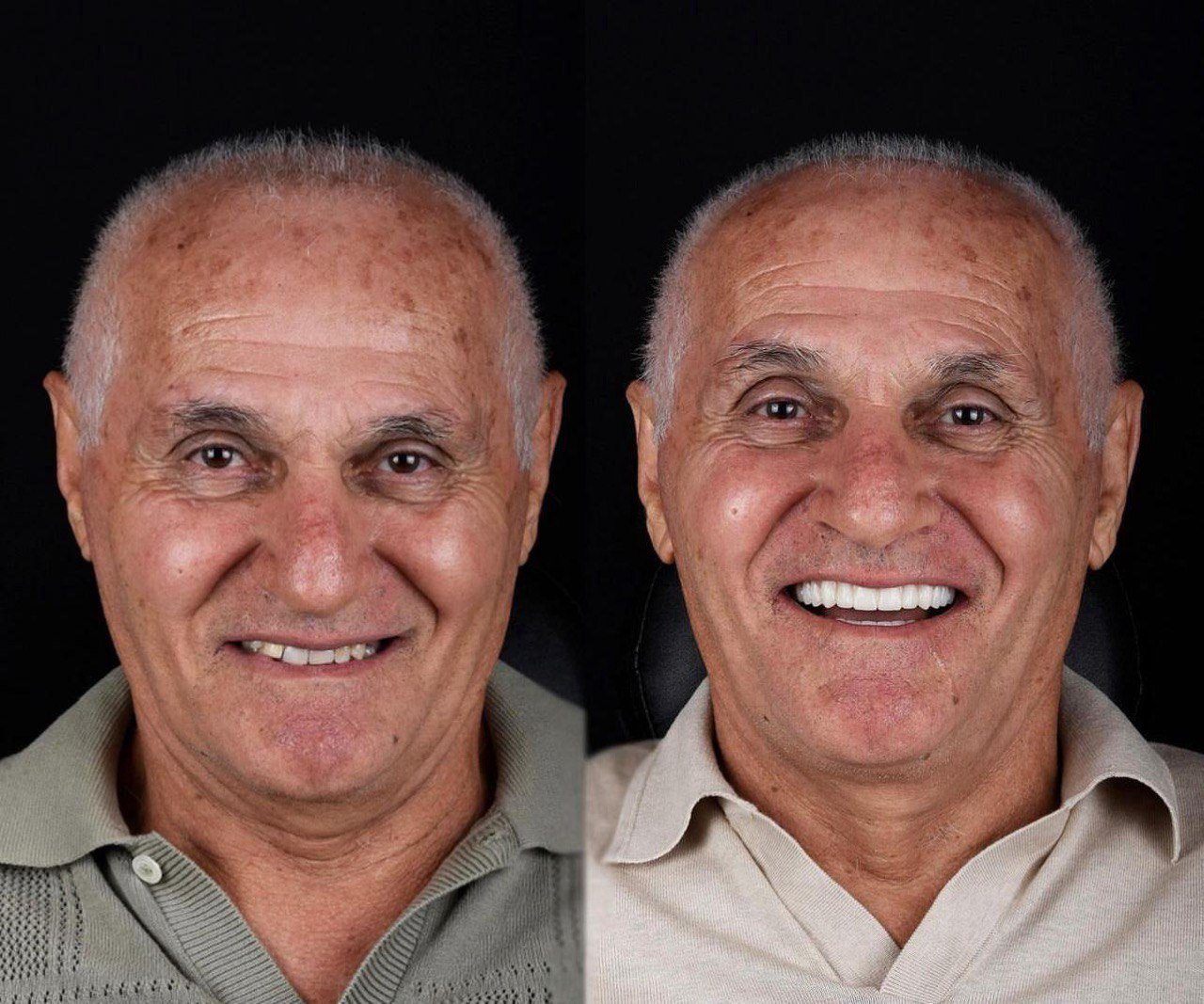
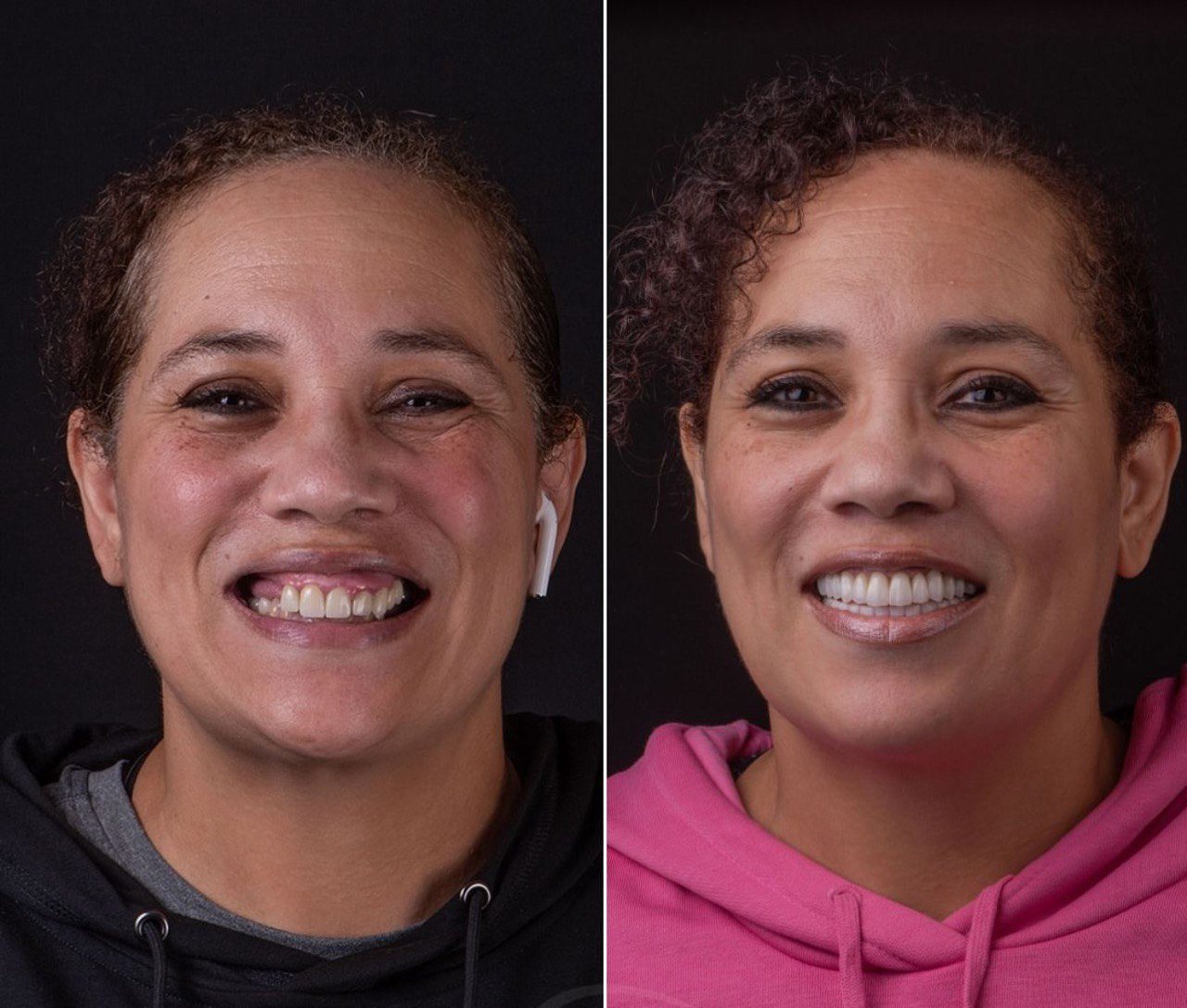
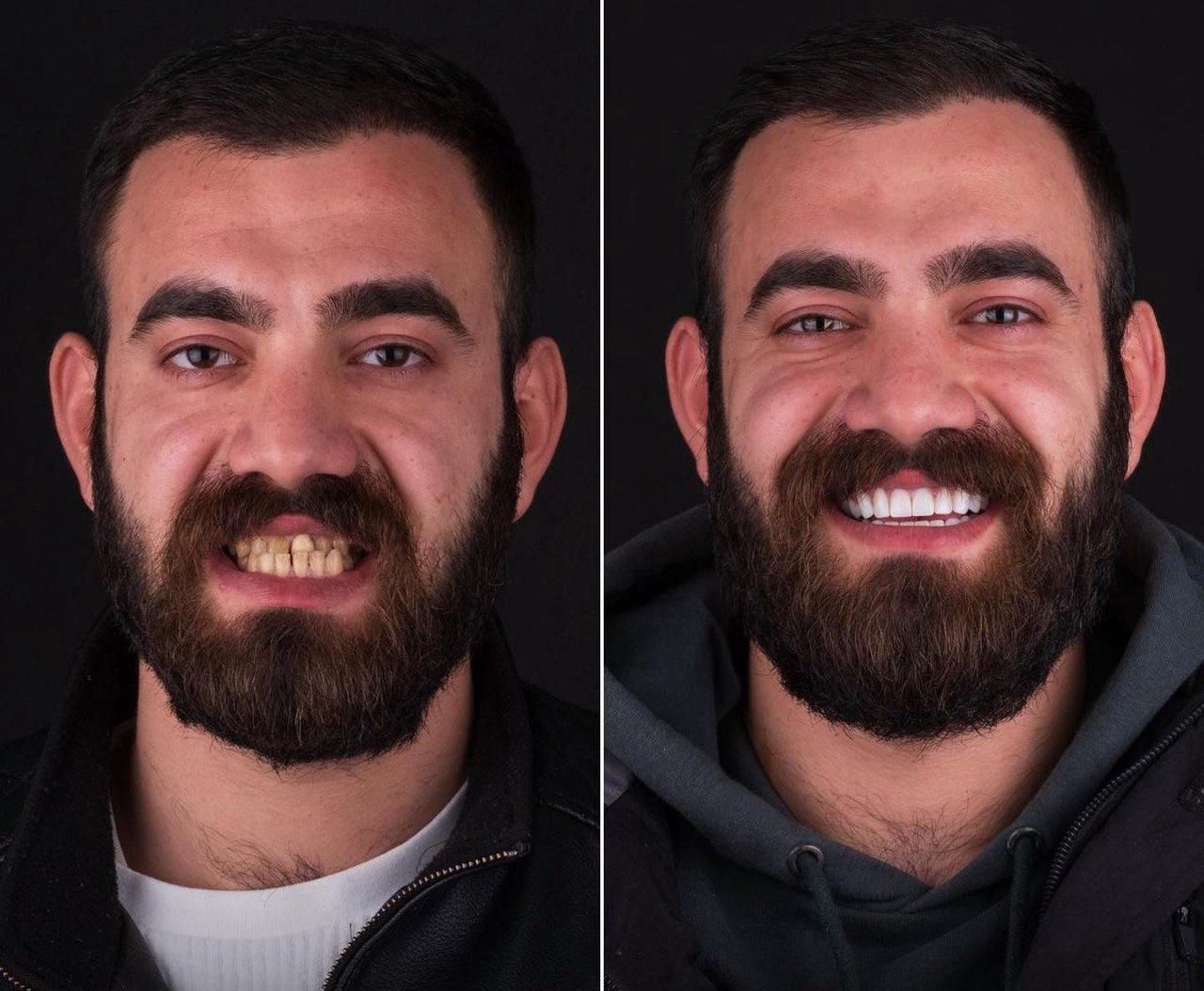
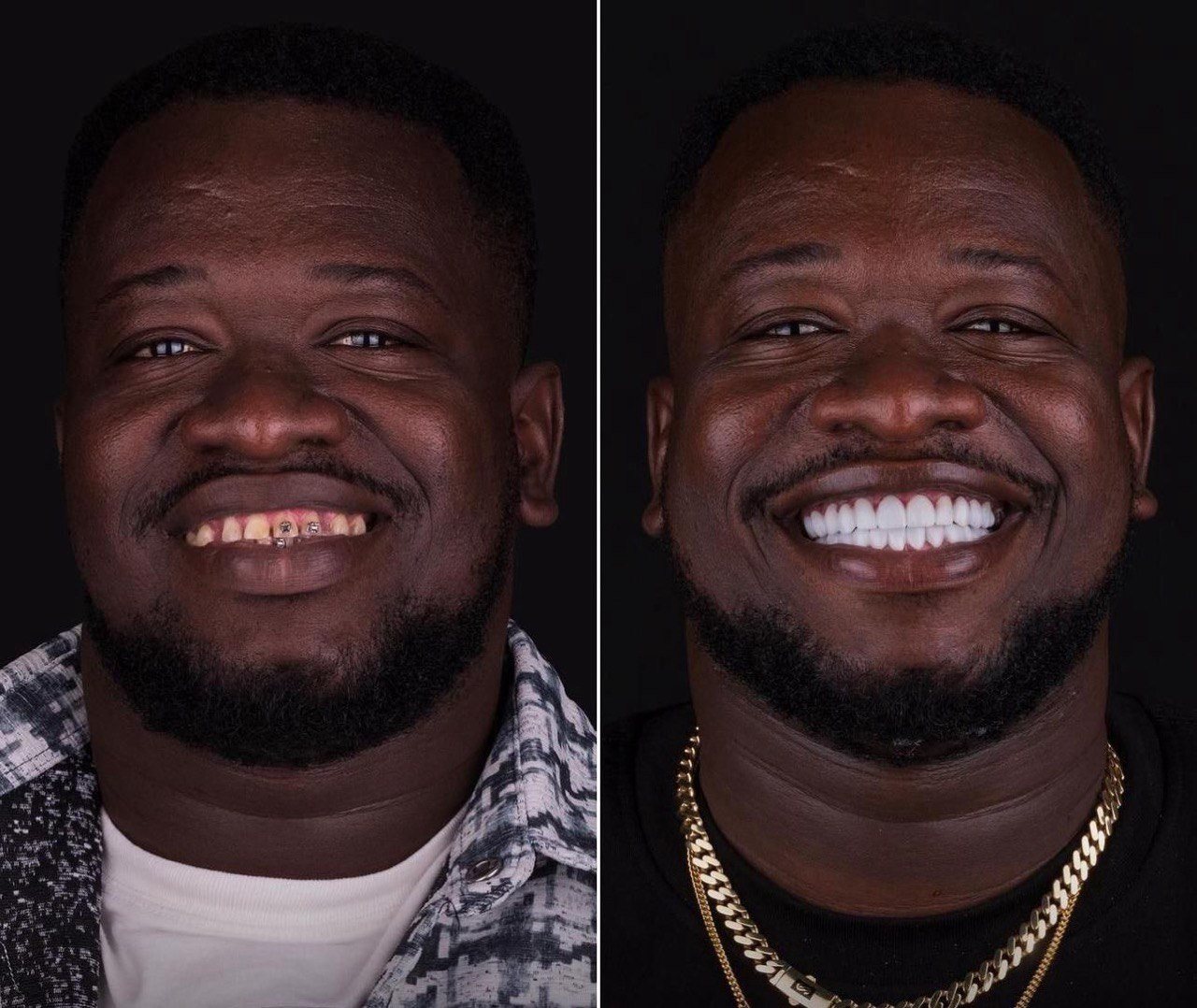
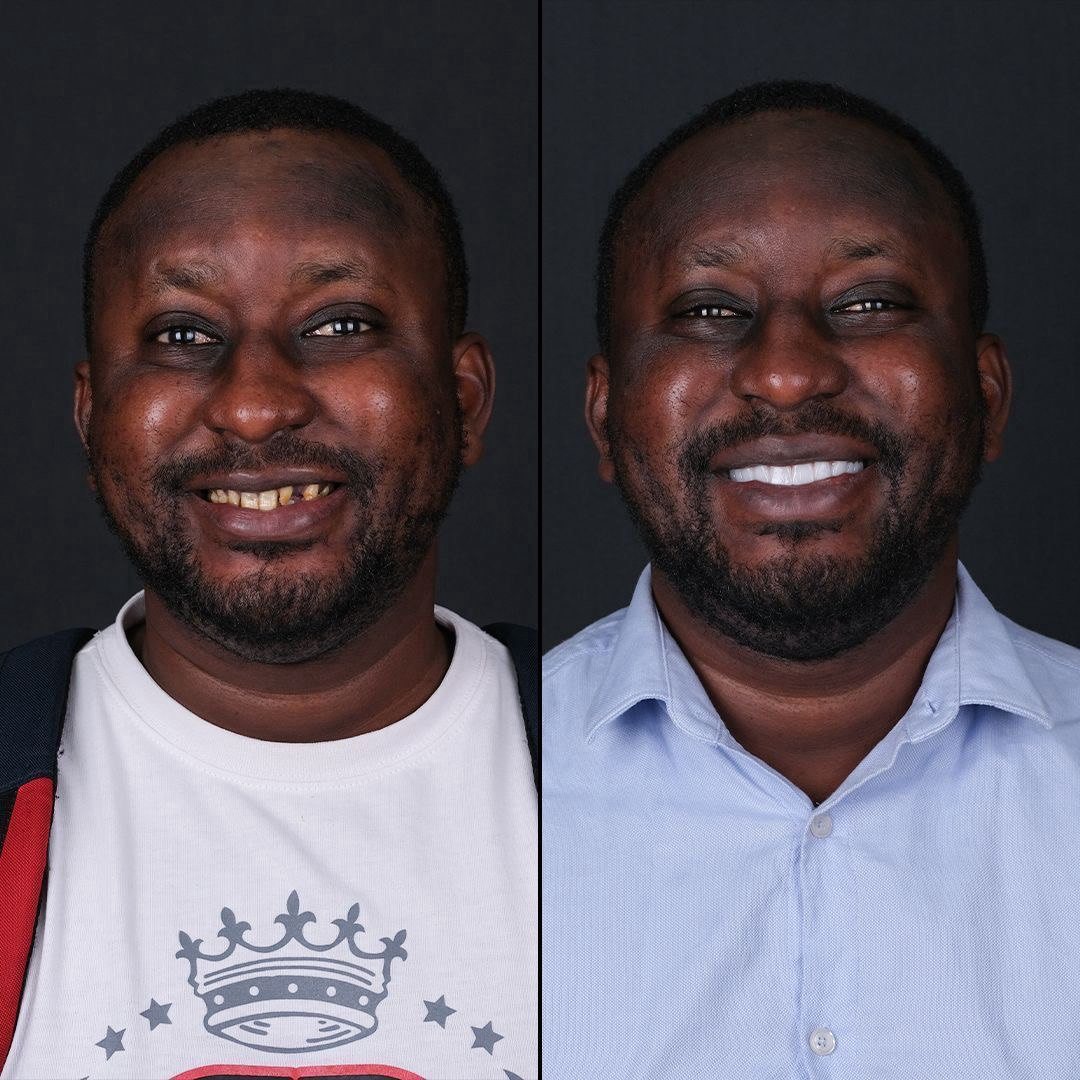
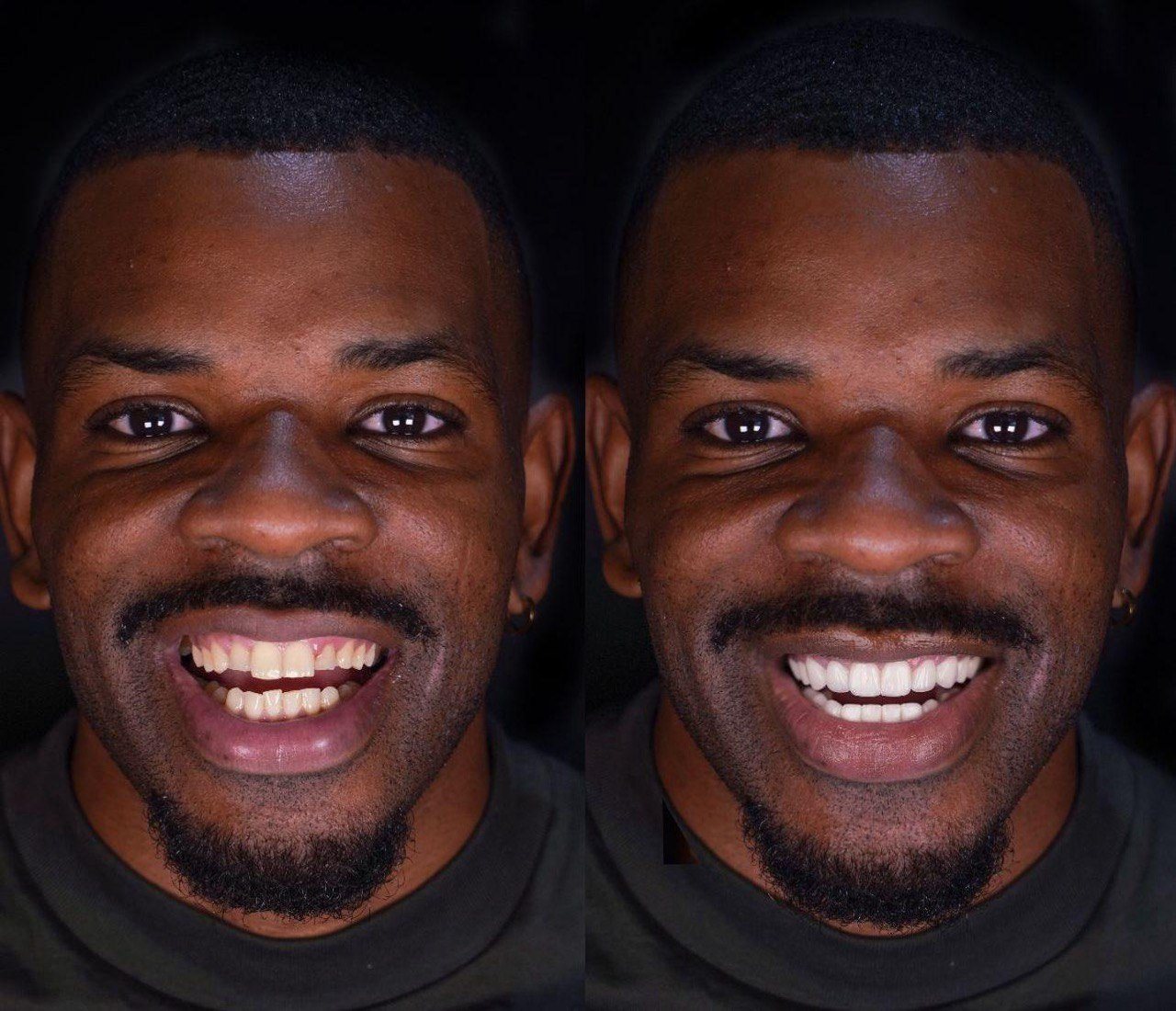
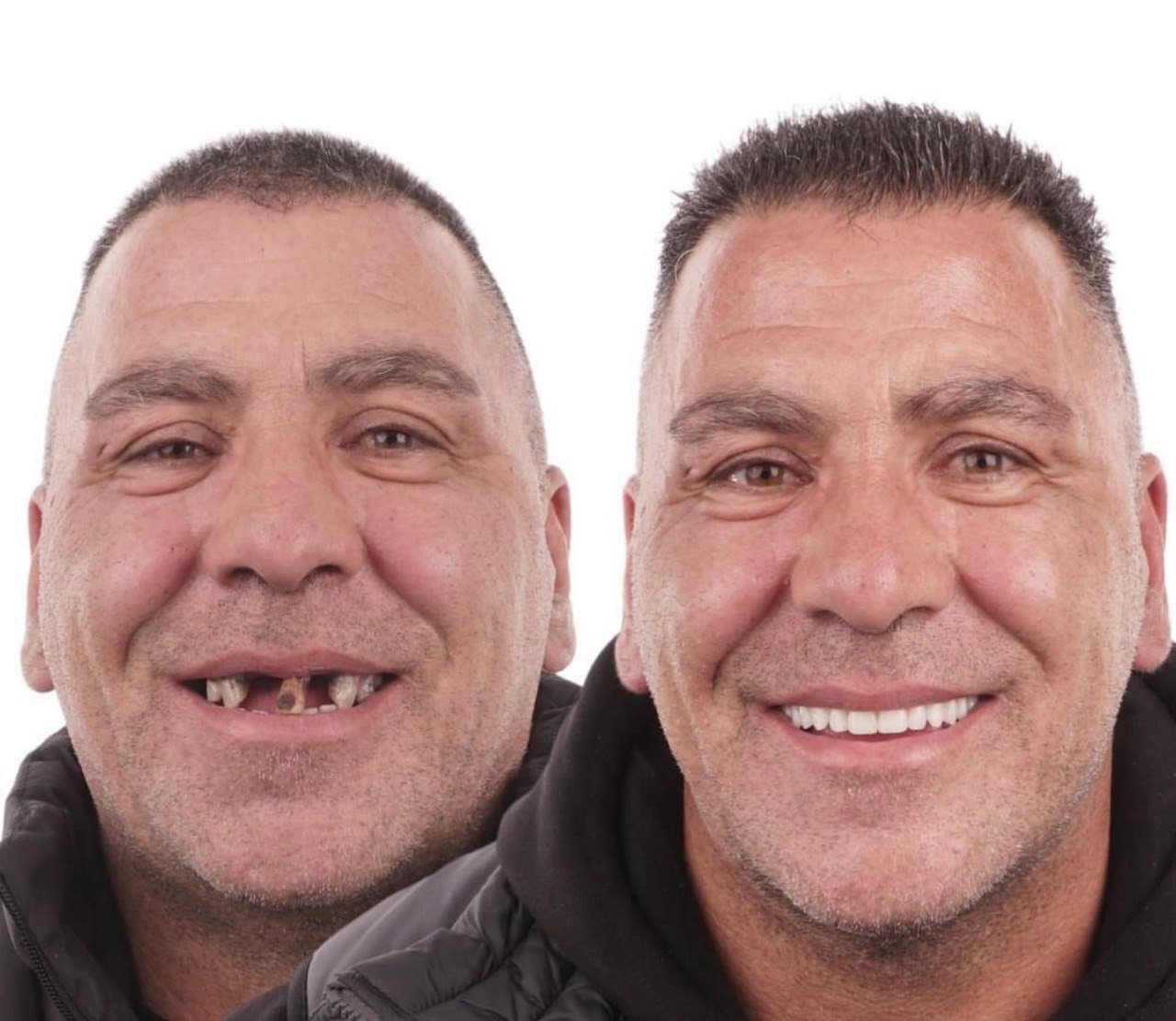
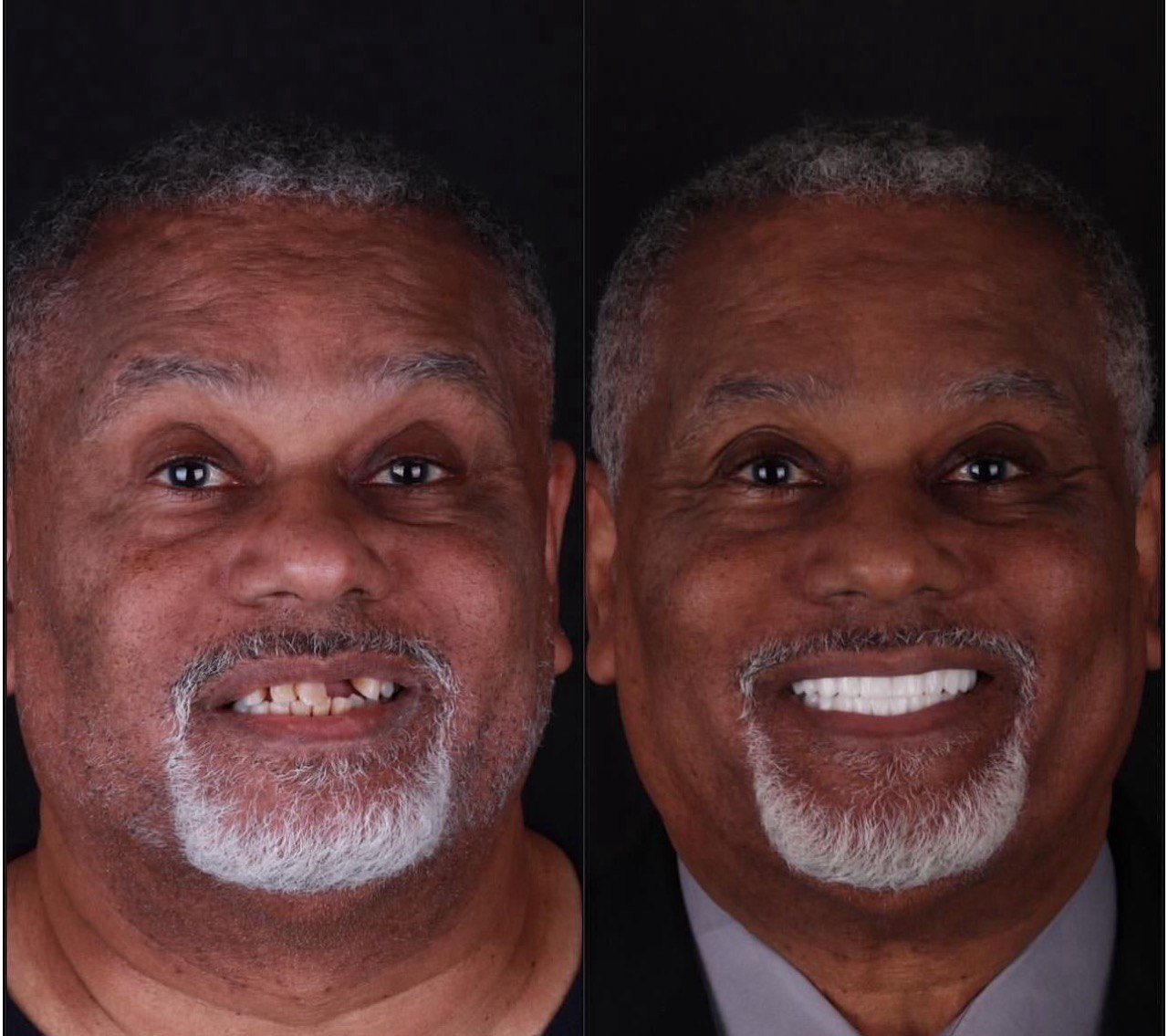
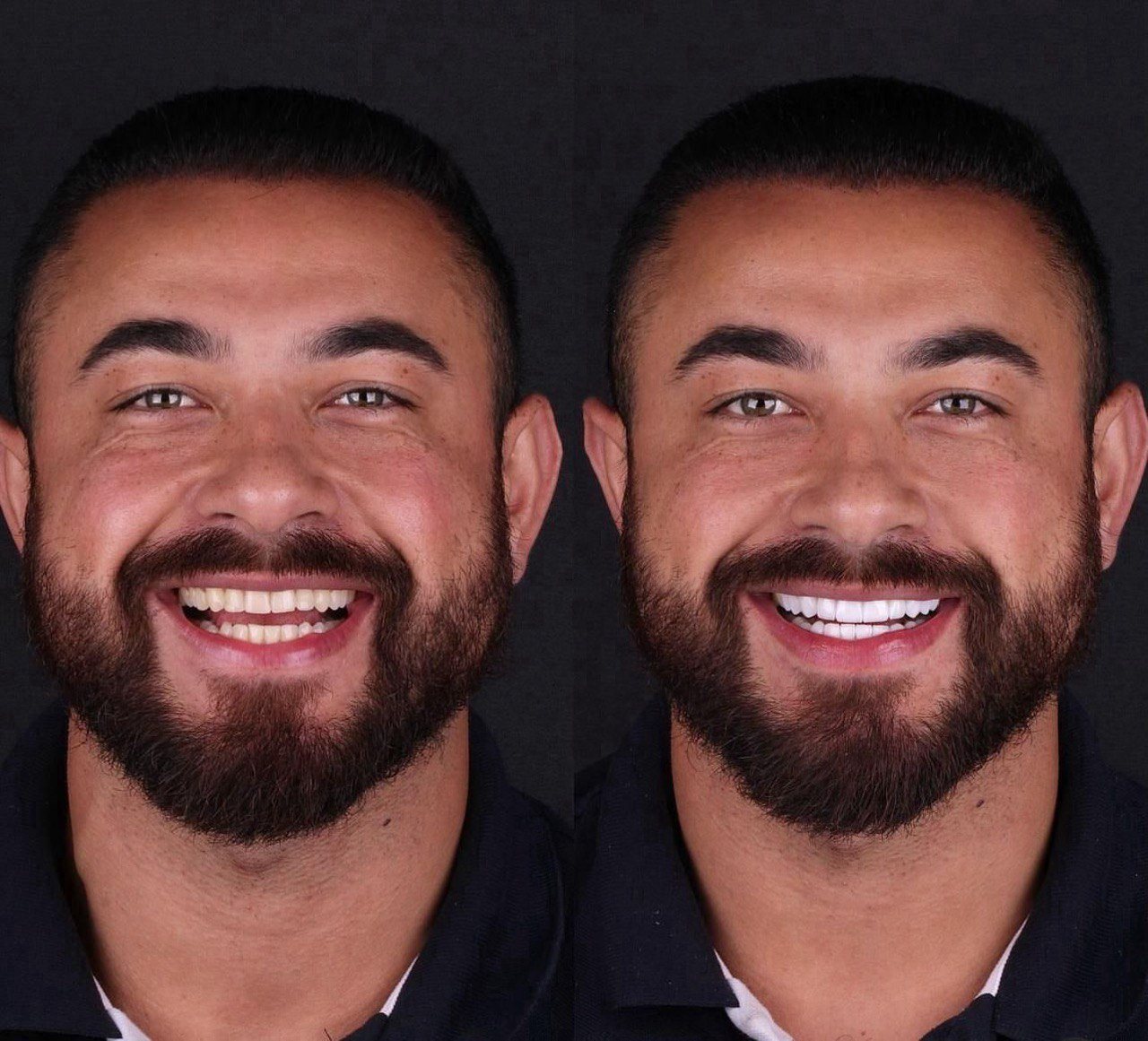
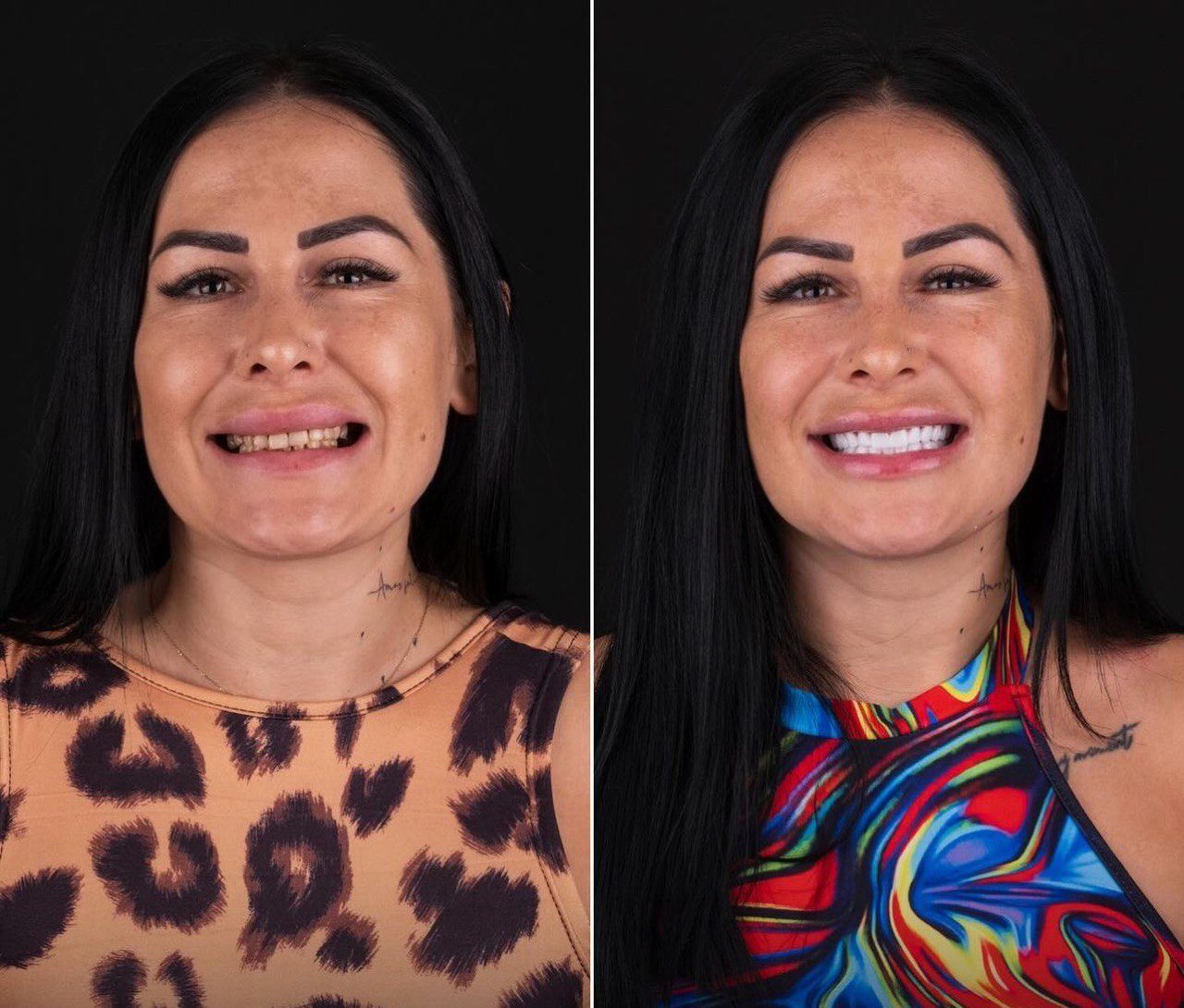
On Video.
Filmed at the clinic. Tap a card to watch.
Start With Two Photographs.
Two photos of your smile and a sentence about what bothers you. A dentist, not a bot, replies the same day.
A consultant is online now

Rated By The People Who Went Through It.

“Missing teeth affected my daily life for years. From the first exam my doctor’s care and expertise made me feel safe at every stage.”

“Clean, modern hospital and a team that answered every message within minutes. I already recommended them to two friends.”

“One year on and nobody can tell. The hairline they designed suits my face. It does not look transplanted.”

“I wanted my nose softened, not replaced. The surgeon showed me the simulation and the result is exactly that.”

“Fourteen months on and I am 38 kilos lighter. The dietitian called me every single month. That made the difference.”

“Type-2 diabetes for nine years, off medication four months after the bypass. My own doctor could not believe the blood work.”

“Professional, warm and honest. They told me exactly what my donor area could give and never oversold.”

“Forty minutes, local anaesthetic, back at the hotel for lunch. A week later I looked ten years less tired.”

“At 54 I did not want to look done. Six weeks on, friends say I look rested.”
One Patient, Three Stages.
Before, the stage that is normally skipped, and the finished result at conversation distance rather than under a studio light.
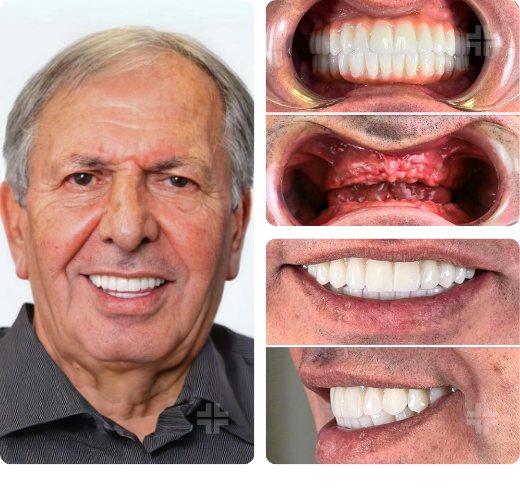
The full set of fourteen pairs, unretouched and without treatment labels we cannot verify, is on the dental page.
The Grey Line, And The Chip.
Metal-ceramic crowns have a metal substructure under porcelain. Over years the gum recedes a fraction of a millimetre and the metal edge shows as a dark line at the neck of the tooth. With no metal at all, that line can never appear.
Layered porcelain also chips, most often on the biting edge of upper front teeth. A crown milled from one solid block has no layer to break away.
Very long bridges spanning many missing teeth still benefit from the tensile strength of a metal frame, and the price difference matters when restoring a full mouth on a tight budget. A good dentist tells you when that is the case rather than upselling by default.
Why Some Zirconium Looks Alive And Some Looks Flat.
Zirconia is not one material. Early generations were strong and opaque, which is where the reputation for flat, chalky crowns comes from. Current multilayer blocks carry a translucency gradient through the block itself, so light passes through the incisal edge the way it does in enamel and stops at the neck the way dentine does.
Read the restShow less
The other half is where the crown sits in the mouth. A single front crown next to natural teeth is the hardest job in dentistry, because the eye compares it directly with the tooth beside it. A full arch is easier to make look right, because everything is being made together.
The Margin: The Line That Shows Up Years Later.
The crown margin is where the crown meets the tooth, and it decides how the work reads at five and ten years rather than on the day it is cemented.
Read the restShow less
- A margin placed slightly under the gum is invisible now and stays invisible as tissue matures, but it must be sealed precisely or it collects plaque.
- A margin left too deep irritates the gum permanently.
- A margin left above the gum is easy to clean and easy to see.
This is judgement, not a setting on a machine, and it is the main reason two crowns of the same material behave differently in the same mouth.
Sensitivity Afterwards: How Long Is Normal.
Some cold sensitivity for the first two to four weeks after preparation is expected while the pulp settles. It should be decreasing, not increasing.
Read the restShow less
Sensitivity that grows, wakes you at night, or lingers for more than thirty seconds after cold is a different signal and should be checked. It usually means the pulp is inflamed and the tooth needs a root canal under the existing crown, which can be done without remaking it.
How Long It Lasts.
Monolithic zirconium has a service life of fifteen to twenty years. We shade-match digitally and mill in-house, which is why a full smile can be completed inside one five to seven day visit.
Read the restShow less
For single crowns, front teeth and full smile designs it is our standard rather than an upgrade. What shortens a crown is almost never the ceramic: it is grinding, an unstable bite, and gum disease left untreated underneath it.
The Ones People Actually Ask.
How much does a dental implant cost in Istanbul, Turkey?
Our current campaign is Buy 3, Pay 2. Your free pre-consultation gives you an exact, all-inclusive quote with no hidden fees.
How are dental implant treatments done in Turkey?
Treatment begins with a 3D CT scan and digital planning. Implants are placed by a specialist dentist under local anaesthesia in a single session, then the jaw heals for 2-3 months before the permanent crown. Simple cases are completed in one 3-5 day visit in Istanbul and All-on-4 full arches in 4-6 days, with the final fitting on your second trip or via a temporary bridge.
How many days do I need to stay in Istanbul for dental implants?
Plan 3-5 days for implant placement, 4-6 days for an All-on-4 full arch and 5-7 days for a zirconium smile makeover or veneers. Recovery is 2-3 days with no pain for most patients, and treatment is outpatient, no hospital stay. We help with airport transfers, a translator and your hotel so the trip is easy.
Are dental clinics in Turkey safe and accredited?
Ours is. Swedish Clinic holds Temos international accreditation for both dental and medical care, works under a Health Tourism Authorisation Certificate issued by the Republic of Türkiye Ministry of Health, and operates an ISO 9001 (UKAS) certified management system. Every implant is placed by a licensed specialist dentist, never a technician.
Does getting a dental implant hurt?
No. Placement is performed under local anaesthesia, so you feel nothing during the procedure. Most patients describe only mild discomfort for a day or two afterwards, easily managed with standard painkillers.
How long do dental implants and zirconium crowns last?
With good oral hygiene and regular check-ups, titanium implants can last a lifetime, which is why we back them with a lifetime warranty. Zirconium crowns typically last 15-20 years before they may need renewal.
Do you help with hotel, transfers and translation?
Yes. We arrange VIP airport transfers, a translator in your language and help with hotel booking, so you can focus entirely on your treatment, and enjoy Istanbul between appointments.
What Stands Behind The Plan.






Related Treatments.
Sixteen to twenty units planned as one object: edge line, width ratios, midline against your face, how much tooth shows at rest.
Dental VeneersA veneer is a 0.3 to 0.7 millimetre shell bonded to the front of a tooth.
Teeth WhiteningIn-office whitening moves most people three to eight shades in one ninety-minute session.
Orthodontics & InvisalignClear aligners handle the majority of adult cases.
More On Monolithic Zirconium.
One is metal-free with no grey gum line; the other is cheaper and still valid in specific cases. Here is when each…
Why some zirconium crowns look flat and others look aliveTranslucency, not the brand name on the block, decides whether a crown reads as a tooth or as a tile, and the stump…

Take The Whole Thing Away With You.
Techniques, what the operating day looks like, the aftercare schedule and every question above. One PDF for the flight home.
Check Every Claim On This Page, In One Click.
Opens ChatGPT with this page already loaded as its source, so you can compare our plan against international standards and ask anything you like before you decide. The conversation is yours. We never see it.
Ask ChatGPT about this plan