
Ninety Minutes, Then Six Weeks Of Discipline.
The operation is short and, in adults, done under local anaesthesia. What decides whether the correction holds is the headband schedule afterwards, because cartilage has elastic memory and spends six weeks trying to spring back.
Why Cartilage Tries To Spring Back.
The antihelical fold we create is held by permanent sutures through the cartilage. For the first six weeks those sutures are working against tissue that wants to return to its original shape.
Scar tissue forming around the new fold is what eventually makes the correction permanent, and that takes about six weeks to become mechanically meaningful.The band is not treating the skin; it is buying time for that scar to form.Technique matters too: sutures placed through scored cartilage hold better than sutures asked to bend an intact spring on their own.
The Schedule, Week By Week.
- Days 1-3.A bulky dressing.
- Weeks 1-2.A soft elastic band day and night. Sleep on your back with two pillows; the pressure of a side-lying head on a freshly sutured ear is exactly the force that loosens a stitch.
- Weeks 3-6.Nights only.
We do not shorten this schedule.Patients who abandon the band early are the ones who need a revision.
Hair, Glasses, Showers And Sport.
- Wash your hair from day four, gently, with the band off and straight back on.
- Light glasses can rest on the ear from about week two; heavy frames wait until week four.
- No swimming for three weeks.
- No headphones that clamp over the ear for six weeks.
- No contact sport for six weeks minimum.
One Ear Sticks Out More: How Symmetrical Can It Get?
Ears are naturally asymmetric, and they were asymmetric before surgery. The goal is that the difference falls below what anyone notices in conversation, not that the two become identical.
A realistic target is a few millimetres of difference in projection, which is invisible in practice. Promising exact symmetry is promising something the tissue does not allow, and chasing it with over-correction on one side produces the pinned look that is harder to undo.
Children: What Age Is Right.
Ear cartilage reaches close to adult size by about five or six years old, which is the earliest the operation is technically sensible. Many families choose the year before or after school starts, when teasing typically begins and a child can follow the aftercare.
Children go back to school after a week but sit out PE until the surgeon clears them. Adults have it under local anaesthesia in about ninety minutes and walk out the same day.
The Ones People Actually Ask.
Is plastic surgery in Turkey safe?
It is when it is done properly. Your operation takes place in a licensed full-fledged hospital with intensive care on site, performed by a board-certified plastic surgeon, under a Health Tourism Authorisation Certificate from the Republic of Türkiye Ministry of Health. We also hold Temos international accreditation and an ISO 9001 (UKAS) certified management system. Ask any clinic abroad for these three things before you book.
How many days do I need to stay in Istanbul for surgery?
Plan 6-7 nights for most operations: consultation and tests on day one, surgery on day two, one night in hospital where needed, then dressing changes and the final check-up before you fly. Eyelid surgery and small procedures need only 3-4 nights.
Who will perform my operation?
A plastic surgeon certified by the Turkish Ministry of Health, never an assistant or technician. You meet your surgeon before the operation, discuss what is realistic for your anatomy, and the same surgeon sees you at the post-operative check-up.
Why is aesthetic surgery cheaper in Turkey than in Europe?
Lower running costs, favourable exchange rates and high surgical volume, not lower standards. The implants, sutures and devices are the same CE-certified brands used in Europe, and our surgeons operate every week rather than a few times a month.
When can I fly and go back to work after surgery?
Flying is normally cleared 5-7 days after surgery. Desk work is possible after about a week for rhinoplasty and eyelid surgery, and 2-3 weeks for body procedures such as tummy tuck, BBL or mommy makeover. Your surgeon gives you a written timeline for your case.
Do you help with hotel, transfers and translation?
Yes. VIP airport transfers, a translator in your language and help with hotel booking are part of every package, and your coordinator stays with you from the first message until long after you fly home.
One Patient, Three Frames.
Before and after, where the scar actually sits, and the result once it has settled months later rather than on the day the dressing came off.
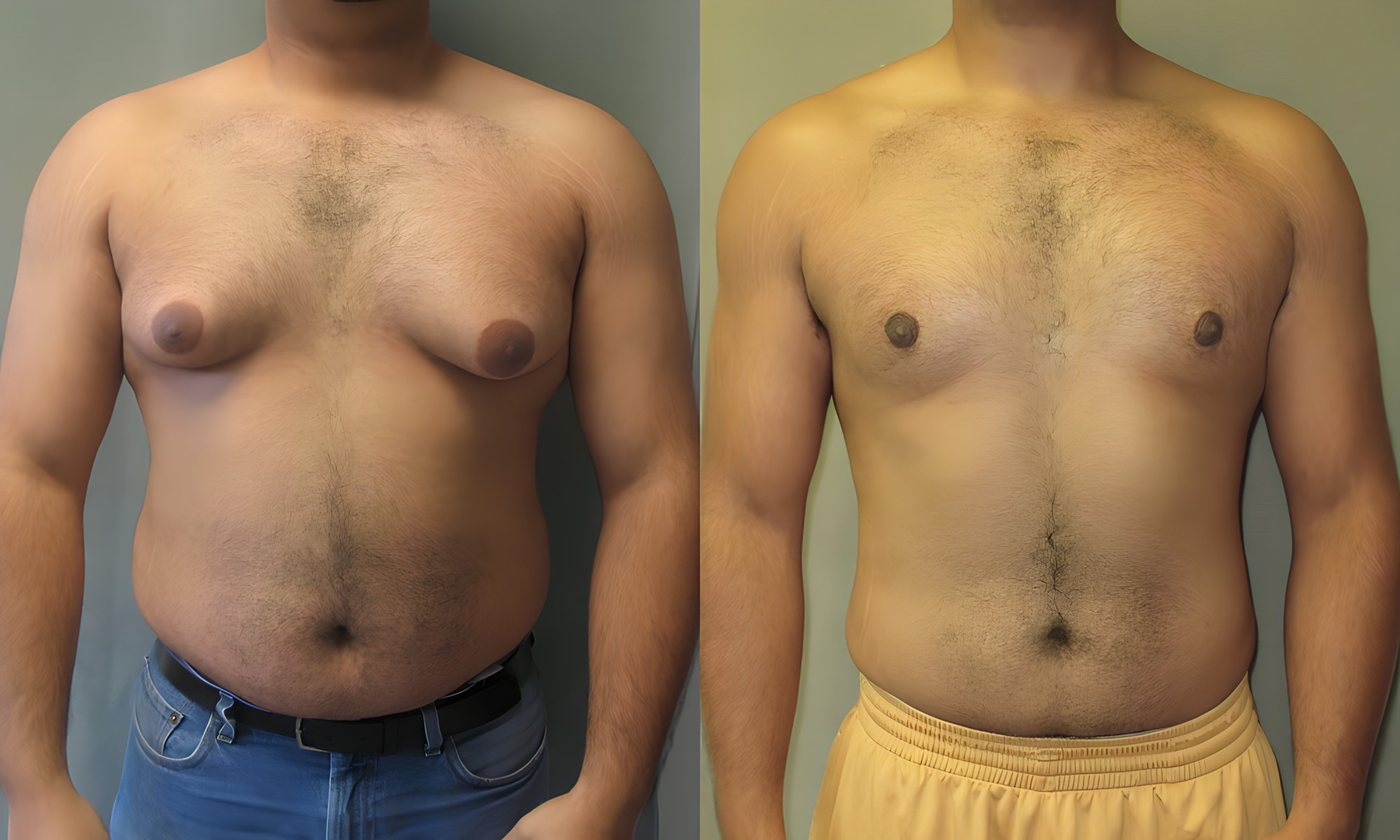
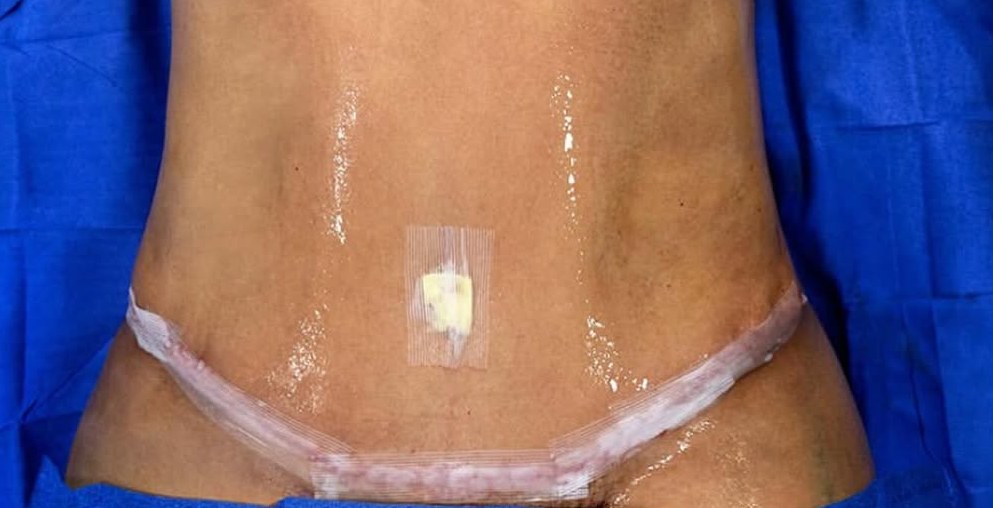
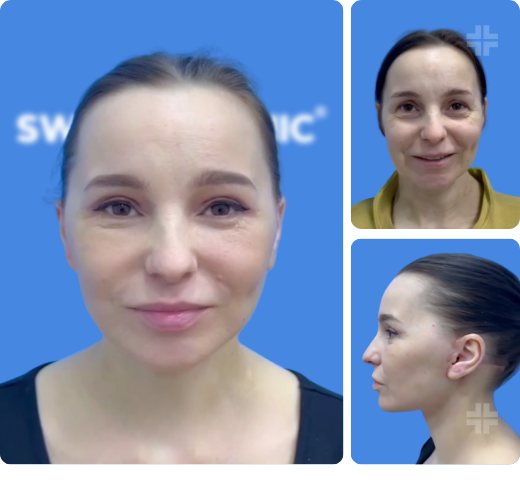
The rest of the before-and-after set is on the plastic surgery page.
Related Treatments.
Which approach suits your nose is decided by how much tip work it needs, not by surgeon preference and not by what you ask for by name.
Deep-Plane FaceliftA SMAS lift tightens the muscular layer.
Eyelid SurgeryEight to twelve millimetres of skin, marked with you sitting upright and rechecked with a pinch test.
Vaser LiposuctionVaser emulsifies fat before any of it is suctioned, so it leaves through a smaller cannula with less tearing of the tissue around it.